
Textiles
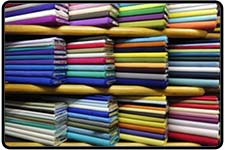 Textiles have such an important bearing on our daily lives that everyone should know something about the basics of fibres and their properties. Textile fibres are used for a wide range of applications such as covering, warmth, personal adornment and even to display personal wealth.
Textile technology has come a long way in meeting these requirements. A basic knowledge of textile fibres will facilitate an intelligent appraisal of fibre brands and types and help in identifying the right quality for the application. This bulletin covers various textile fibres and the properties that are important for a suitable textile application.
Fibre Classification
Textile fibres can be broadly classified into two categories:
- Natural fibres
- Man-made fibres
Natural Fibres
Cotton
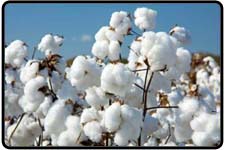
Cotton, the natural fibre most widely used in apparel, grows in a boll around the seeds of cotton plants. A single fibre is an elongated cell that is a flat, twisted, hollow, ribbon-like structure
 Characteristics:
Linen
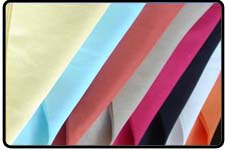
Linen, one of the most expensive natural fibres, is made from the flax plant. It is labour-intensive to produce, hence produced in small quantities. However linen fabric is valued for its exceptional coolness and freshness in hot weather. It is composed of 70% cellulose and 30% pectin, ash, woody tissue and moisture.
 Characteristics:
Wool
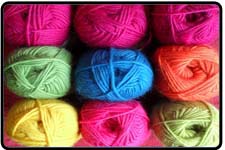
Wool fibre grows from the skin of sheep and is a relatively coarse and crimped fibre with scales on its surface. It is composed of protein. The fibre appearance varies depending on the breed of the sheep. Finer, softer and warmer fibres tend to be with more and smoother scales. Thicker, less warm fibres have fewer and rougher scales. Normally, the better wool fibres with finer scales are duller in appearance than the poorer quality fibres which have fewer scales.
 Characteristics:
Silk
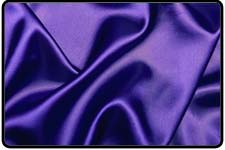
Silk is a fine, continuous strand unwound from the cocoon of a moth caterpillar known as the silkworm. It is composed of protein. It is very shiny due to the triangular prism-like structure of the silk fibre, which allows silk cloth to refract incoming light at different angles.
 Characteristics:
Man-made Fibres
Rayon
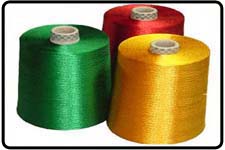
Rayon is made from naturally occurring polymers that simulate natural cellulosic fibres. It is neither a truly synthetic fibre nor a truly natural fibre. There are two varieties of Rayon; viscose and high wet modulus (HWM). These in turn are produced in a number of types to provide certain specific properties.
 Characteristics:
Nylon
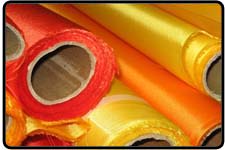
In nylon, the fibre forming substance is a long-chain synthetic polyamide in which less than 85% of the amide linkages are attached directly to two aromatic rings. The elements carbon, oxygen, nitrogen and hydrogen are combined by chemical processes into compounds which react to form long-chain molecules, chemically known as polyamides and are then formed into fibres. There are several forms of nylon. Each depends upon the chemical synthesis.
 Characteristics:
Polyester
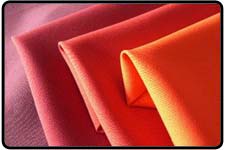 In polyester, the fibre forming substance is any long-chain synthetic polymer composed of at least 85% by weight of an ester of a substituted aromatic carboxylic acid, but not restricted to substituted terapthalate units and para-substituted hydroxybenzoate units. In producing such fibres, the basic elements of carbon, oxygen and hydrogen are polymerised. Variations are possible in the methods of production, in the combination of ingredients and in the ultimate molecular structures of the fibre forming substance.
Characteristics: